
16 Days of Activism 2025: Unmasking Abuse, Amplifying Women’s Resistance.
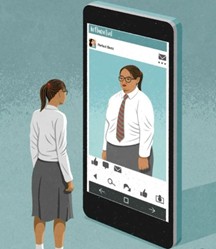 Every year when November approaches, the world pauses, just briefly, to acknowledge a truth women have lived with for centuries: violence is the most widespread, persistent, and devastating human rights violation on the planet.
And yet, when the 16 Days of Activism Against Gender-Based Violence return, it feels less like a commemoration and more like a collective plea: Do not forget us. Do not grow numb. Do not move on while women continue to bleed, online and offline.
This year, as the campaign begins on 25 November and marches through to 10 December, I find myself reflecting on the shape violence now takes. It is changing, mutating, adapting. It is no longer confined to dark alleys or hidden rooms. It now travels through cables, towers, screens, and algorithms. The virtual world has become the new frontline.
Imagine a young woman named Amina, an activist in Nairobi.She wakes up one morning to find her face plastered across social media, attached to a manipulated image she never took, described with words she never said. Within hours, her phone is buzzing with threats.
Her name becomes a hashtag of abuse. Her voice becomes a target.Her life becomes unsafe.
Amina is fictional, but her story is painfully real. It could be the journalist in Uganda, the student in Ghana, the refugee woman in Sudan, the content creator in South Africa, or the girl in a rural Ethiopian school who borrowed a smartphone to join an online debate.
Digital violence does not discriminate, it finds any woman with a voice and tries to break it.
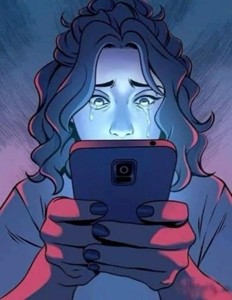
Technology-Facilitated Gender-Based Violence (TFGBV) is no longer a side conversation. It is the newest form of oppression, quiet, fast, and relentless. It shows up as:
- The partner demanding passwords “to prove loyalty.”
- The anonymous troll threatening rape in a comment section.
- The hacked social media account used to impersonate a woman.
- The deepfake video designed to shame a female politician into silence.
- The WhatsApp group where intimate photos circulate like entertainment.
- The message that says, “If you leave me, everyone will see this.”
For many women, digital violence becomes a trap they cannot outrun.
The internet never forgets; neither does trauma.
Africa is rising digitally. Smartphones are cheap, internet penetration is growing, and young women are claiming online spaces in ways unimaginable a decade ago. But for many, this digital awakening comes with unbearable costs.
For too long, the world has treated violence against women as inevitable, as if it is woven into the fabric of culture, conflict, or technology. And for every survivor, there is a barrier:
- Police stations that do not understand digital evidence.
- Laws that lag behind the speed of technology.
- Societies quick to blame women instead of perpetrators.
- Online platforms that make billions but cannot guarantee basic safety.
TFGBV thrives on impunity. Impunity thrives on silence. Silence thrives on fear. And fear thrives where justice fails.
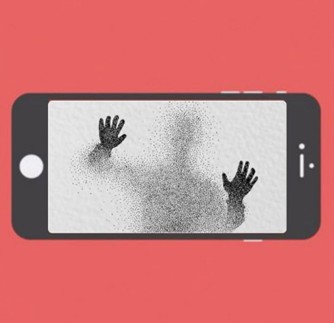 Despite the terror and threats, despite violence evolving faster than the systems meant to contain it, women are rising anyway. Across Africa and the world, they continue to reclaim space: girls coding safer platforms, activists demanding digital justice, survivors refusing shame, and communities building networks of protection and healing. From New York to Nairobi, Delhi to Mexico City, Tokyo to Syria, different languages tell the same story of harm, but also the same story of courage. This is what fuels the 16 Days of Activism: a global movement united not only to expose violence, but to celebrate resistance. And in 2025, our call must be louder, fiercer, and more urgent than ever, because this is the year we finally say enough.
